

If your washing machine completes the wash cycle but leaves your clothes soaking wet, the spin system isn’t working properly. In some cases, the drum won’t rotate at all. In others, it spins very slowly or stops before reaching full speed. While this problem is frustrating, it doesn’t always mean the washer has suffered a major failure.
A washer can refuse to spin for several different reasons, ranging from an overloaded drum to worn mechanical components or electronic control problems. Understanding why the spin cycle stopped is the first step toward preventing unnecessary repairs.
Here are the most common causes:
- An unbalanced load
- A clogged drain pump or filter
- A faulty lid switch or door lock
- Worn drive belt
- Motor or control board issues
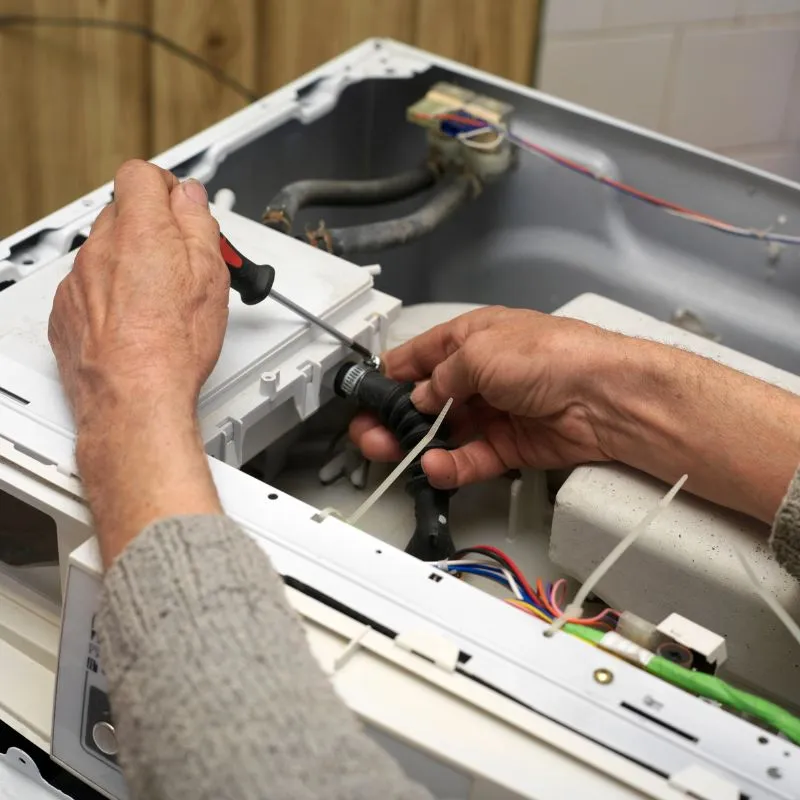




How the Spin Cycle Works
Before the washer begins spinning, it must complete several important checks. The appliance verifies that the door is securely locked, pumps all remaining water out of the tub, balances the laundry load, and then gradually increases drum speed.
If any of these steps fail, the control system may cancel the spin cycle to protect both the appliance and your laundry.
Most Common Reasons a Washer Won’t Spin
Unbalanced Laundry Load
Large blankets, comforters, rugs, and heavy towels can collect on one side of the drum. Modern washing machines detect excessive vibration and automatically reduce or cancel the spin cycle to prevent damage.
If this happens, pause the cycle, redistribute the clothes evenly, and restart the spin program.
Drain Pump or Filter Blockage
The washer must remove all water before spinning at full speed. If the drain pump is blocked by lint, coins, socks, or other debris, water remains inside the tub and the control system prevents the drum from accelerating.
Common signs include slow draining, standing water, or humming sounds from the pump.
Faulty Door Lock or Lid Switch
For safety reasons, modern washers will never enter the spin cycle unless the door locking system confirms that the door is securely closed.
A damaged door latch, faulty lock assembly, or failed lid switch can prevent spinning even though the rest of the wash cycle appears normal.
Worn Drive Belt
Many belt-driven washing machines rely on a rubber drive belt to transfer power from the motor to the drum. Over time, the belt may stretch, crack, or break completely.
Typical symptoms include a drum that doesn’t rotate, squealing noises, or the smell of burning rubber.
Worn Drum Bearings
If the washer makes a loud roaring or grinding noise before refusing to spin, worn drum bearings may be responsible. As friction increases, the motor struggles to rotate the drum efficiently, eventually causing the spin cycle to fail.
Motor or Electronic Control Failure
When mechanical components appear normal, the problem may involve the drive motor, motor control board, speed sensor, or the main electronic control board. These components require electrical testing to diagnose accurately.
What You Can Check Yourself
Before scheduling service, perform these basic inspections:
- Reduce and redistribute the laundry load.
- Run a separate Spin & Drain cycle.
- Clean the drain pump filter.
- Inspect the drain hose for kinks.
- Confirm the washer door locks properly.
- Listen for unusual grinding, humming, or clicking noises.
- Check whether the drum turns freely by hand.
If the washer still refuses to spin after completing these checks, an internal mechanical or electrical component has likely failed.
When Professional Repair Is Recommended
Professional diagnosis is usually the safest option when:
- The drum won’t rotate at all.
- The washer makes grinding or roaring noises.
- The spin cycle stops every time.
- Error codes continue appearing.
- The appliance smells like burning rubber or hot electrical components.
- The circuit breaker trips during operation.
Continuing to run the washer under these conditions may increase damage to the motor, bearings, suspension system, or electronic controls.
Professional Washing Machine Spin Repair
Our experienced appliance repair technicians diagnose every component involved in the spin cycle, including drain pumps, door lock assemblies, suspension systems, drive belts, drum bearings, motors, speed sensors, and electronic control boards. After identifying the exact cause of the failure, we recommend only the repairs your washer actually needs.
We repair front-load and top-load washing machines from all major brands and complete many repairs during the first service visit using high-quality replacement parts.
Schedule Same-Day Washer Repair
If you’re located in Brooklyn, Queens, Manhattan, or Staten Island and your washing machine won’t spin properly, don’t let the problem become more expensive. Contact Express Repair NY today for fast, professional same-day appliance repair and get your washer back to reliable performance.


