

The moment your washer stops mid cycle, the problem feels dramatic.
The drum is full of water, the timer freezes, and you’re left guessing. If your washing machine stops mid cycle more than once, it’s not random behavior.
It’s a system reaction. Some users even search washing machine stops mid was in a rush, trying to describe what just happened.
Behind every wording, there’s a technical reason.
Let’s break it down properly — without panic and without guesswork.
Book Online and Save $25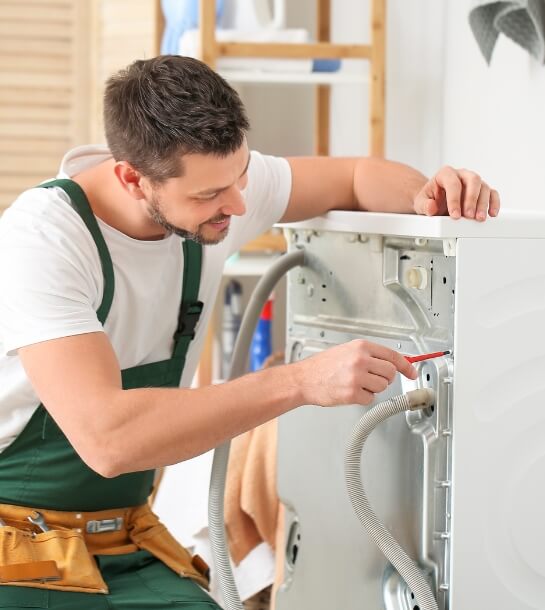




What It Means When the Cycle Doesn’t Finish
When a washer stops mid cycle, the appliance is usually protecting itself. Modern machines are built with multiple safety checks. If one parameter fails, the program pauses automatically.
If your washing machine stops mid cycle at the same stage each time, pay attention to the pattern. Repetition is a clue.
Basic things to check first:
- Overloaded drum
- Uneven distribution of heavy fabrics
- Unstable power supply
- Door lock not engaging fully
Sometimes a washer stops mid cycle simply because the load is too heavy for proper rotation. Before assuming a serious breakdown, reduce the load and restart.
If the Problem Happens During Washing
When a washing machine stops during wash cycle, water supply and heating are the first suspects. The appliance measures water level and temperature constantly.
A washing machine stops during wash cycle if:
- Water pressure is too low
- Inlet valve filters are clogged
- The heating element fails
- The temperature sensor sends incorrect readings
If a washing machine stops during wash cycle before heating is complete, the system may be preventing overheating or electrical overload. This is especially common in older units with worn heating elements.
Another sign: the drum moves slowly, then pauses completely. That’s not random — it’s a failed condition check.


Drainage Problems Most People Ignore
A very common complaint is when a washer stops before spin cycle and leaves clothes soaking wet. Spinning cannot begin until all water is drained.
A washer stops before spin cycle when:
- The drain pump is blocked by lint or debris
- The drain filter hasn’t been cleaned in months
- The hose is bent or clogged
- The pump motor is failing
If your washer stops before spin cycle every time at the draining stage, open and inspect the filter first. It’s one of the simplest maintenance steps, yet it solves the issue surprisingly often.
When a washer stops before spin cycle repeatedly, ignoring the drainage system can eventually damage the pump completely.
High-Speed Spinning and Safety Stops
If a washer stops during spin cycle, imbalance protection is usually activated. High RPM requires stability. Even one heavy blanket can shift the center of gravity.
A washer stops during spin cycle because of:
- Uneven load distribution
- Worn shock absorbers
- Loose drum bearings
- Damaged suspension springs
When a washer stops during spin cycle with loud vibration, mechanical wear is likely. If a washer stops during spin cycle silently without noise, the motor control board may be limiting acceleration due to sensor data.
Redistributing the load often solves the problem immediately.
Electrical and Control Module Failures
If a washer stopped in middle of cycle and won’t restart, electrical issues should be checked. A washer stopped in middle of cycle after a power flicker may simply need a reset.
However, if a washer stopped in middle of cycle and the display goes blank or shows random errors, the control board could be malfunctioning.
Typical electrical causes include:
- Voltage instability
- Damaged outlet
- Burned control board components
- Internal wiring issues
When electronics are involved, repeated restarts won’t permanently solve the issue.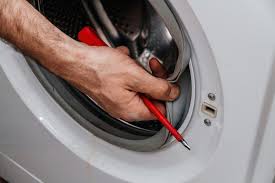
Repair or Replace?
If your washing machine stops mid cycle occasionally, maintenance may solve it. But if the washer stops mid cycle weekly and the machine is over 8–10 years old, repair costs can add up quickly.
Consider replacement if:
- The control board is damaged
- The motor shows wear
- Multiple components fail at once
When a washing machine stops mid cycle repeatedly despite cleaning filters and balancing loads, professional diagnostics become necessary.
Whether a washing machine stops during wash cycle, a washer stops before spin cycle, or a washer stops during spin cycle, timing tells you everything.
Watch when it stops. Listen for noise changes. Check drainage before calling for service. And remember — when a washer stopped in middle of cycle, it wasn’t random. It was reacting to something specific.