

When you notice a fridge door wet, it’s easy to assume something is “leaking.” In most cases, though, it’s simple physics: warm, humid air meets a cold surface and turns into water droplets. The good news is you can usually fix Moisture on the Fridge Door without calling a technician—if you pinpoint the real cause.
Why a fridge door gets wet in the first place
A refrigerator runs colder than the air in your kitchen. If humid air reaches the door surface (outside) or sneaks inside through a weak seal (inside), condensation appears. That’s why a fridge door wet issue often comes and goes depending on weather, cooking, and how often the door is opened.
Common triggers include:
- High indoor humidity (rainy seasons, lots of cooking, poor ventilation)
- Door being opened frequently (family members “browsing” the fridge)
- A worn or dirty door gasket (seal)
- Door not closing fully due to misalignment or overcrowded shelves
- Temperature settings that are too low or uneven airflow





Quick diagnosis: where is the water?
Different locations suggest different causes. Use this simple check to narrow it down.
| Where you see the water | What it usually means | Likely fix |
|---|---|---|
| Outside of the door (front surface) | Humid air condensing on a cold exterior | Reduce room humidity, check temperature settings |
| Along the door edges | Air leaking at the gasket | Clean/inspect gasket, do the “paper test” |
| Inside the door or on inner rim | Warm air getting in when the door isn’t sealing | Replace gasket, realign door, clear obstructions |
| Water dripping down to the floor near hinge | Door not closing fully or seal failure | Level fridge, check hinge, remove shelf blockers |
If you’re dealing with Moisture on the Fridge Door mainly on the outside, humidity is the top suspect. If the fridge door wet problem is inside or around the edges, the seal and closure are the priority.
Step-by-step fixes that work in real kitchens
1) Do the “paper test” on the gasket
Close a sheet of paper in the door and tug gently.
-
If it slides out easily in one area, that spot is leaking air.
-
If it grips evenly all around, the seal is likely fine.
Air leaks are a major reason for Moisture on the Fridge Door, because warm air enters, cools instantly, and condenses.
2) Clean the gasket properly (it matters more than people think)
Grease, crumbs, and sticky residue prevent a tight seal.
-
Use warm soapy water and a soft cloth.
-
Dry thoroughly.
-
If mold is present, use a mild baking soda solution and wipe clean.
A dirty gasket can make a fridge door wet situation look like a “mystery leak,” when it’s simply a seal problem.
Discover Solutions for Other Common Refrigerator Issues


3) Check door alignment and leveling
If the fridge isn’t level, the door may not close fully on its own.
-
Make sure the front feet are slightly higher than the back (common recommendation so doors swing shut).
-
Confirm shelves and bins aren’t blocking closure.
Even a small gap can create continuous Moisture on the Fridge Door because humid air keeps cycling in.
4) Adjust temperature only if needed
Overly cold settings can increase condensation on the exterior in humid rooms.
General targets:
- Fridge compartment: about 3–4°C (37–40°F)
- Freezer: about -18°C (0°F)
If your fridge is set much colder than necessary, you may see fridge door wet symptoms more often, especially in summer or in small kitchens.
5) Reduce room humidity (the underrated fix)
If the outside surface is wet, the refrigerator may be normal—your room air is the problem.
Try:
- Run an exhaust fan while cooking
- Avoid boiling water uncovered for long periods
- Use a dehumidifier in very humid apartments
- Improve airflow around the fridge (don’t push it flush against a wall)
For many households, lowering humidity is the fastest way to stop Moisture on the Fridge Door from returning.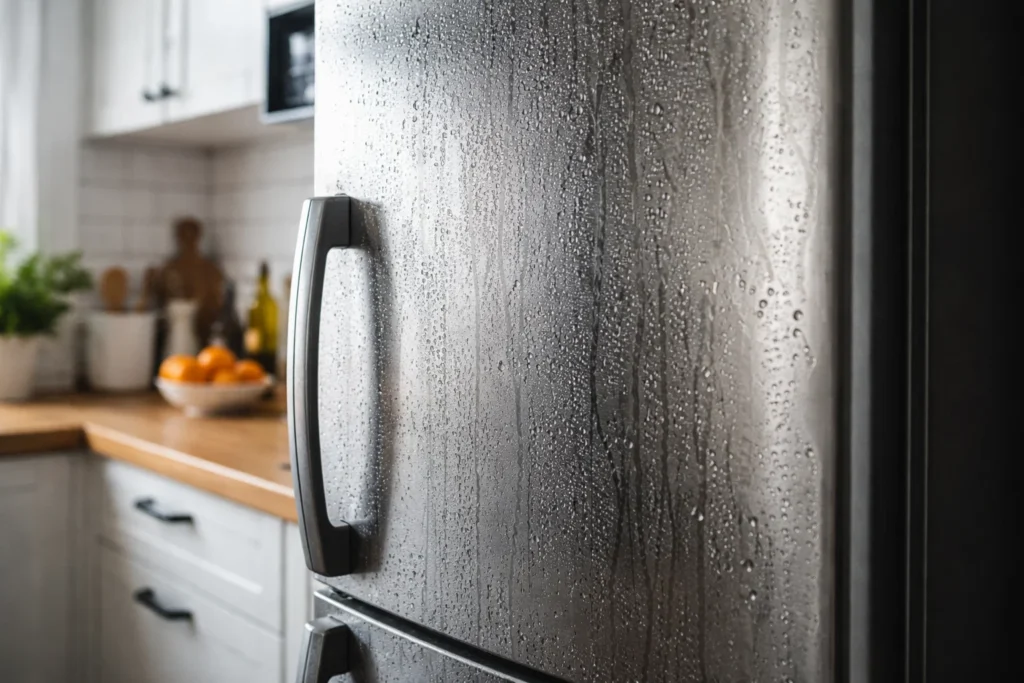
A practical checklist to prevent the problem
Use this quick routine if you want the fix to last:
- Wipe the gasket clean once a month
- Don’t overload door shelves (it can twist the seal)
- Close the door firmly—avoid “soft closing”
- Keep hot food covered and let it cool slightly before storing (reduces internal humidity)
- Don’t leave the door open while deciding what to eat
These habits reduce both Moisture on the Fridge Door and the chances of seeing a fridge door wet surface after cooking.
When it might be a bigger issue
Condensation is common, but you should investigate further if:
- There’s heavy frost buildup inside the freezer
- The fridge can’t hold temperature
- Water pooling keeps appearing even after gasket checks
- You hear the fan struggling or airflow seems weak
In those cases, a defrost system or airflow problem could be contributing, and Moisture on the Fridge Door might be a symptom rather than the main issue.