

A broken freezer is one of those problems you notice too late: ice cream turns soft, meat thaws, and you’re suddenly racing against time. The good news is that many freezer failures come from a handful of common causes—some you can fix in minutes, others need parts or a technician.
Below is a step-by-step guide that matches what most people are actually searching for: why a freezer stops freezing, what to check first, what you can safely fix yourself, and how to avoid losing your food.
Confirm It’s Really a Broken Freezer
Before assuming you’ve got a broken freezer, check two basics:
- Temperature target: Most freezers should sit around 0°F / -18°C.
- Stabilization time: After loading groceries or adjusting settings, it can take several hours to stabilize.
If it’s still above freezing after that, treat it like a real broken freezer situation and move through the checks below in order.
Book Online and Save $25




Fast Checks That Solve a Lot of “Not Freezing” Complaints
Many cases of a “broken freezer” are actually airflow, door-seal, or power issues.
- Verify the unit is fully plugged in and the outlet works (try another device).
- Make sure the door closes completely (no packaging, ice buildup, or a tilted fridge preventing closure).
- Confirm the temperature setting wasn’t bumped.
- Check for blocked vents inside the freezer (items pressed against the back wall can stop airflow).
- Listen for the compressor: it should cycle on and off. Total silence can indicate power/control issues; constant running can suggest poor cooling efficiency.
Common Symptoms and What They Usually Mean
Here’s a quick diagnostic table you can use to narrow down what’s happening.
| Symptom | Likely Cause | What You Can Do Now | When It’s “Call a Pro” |
|---|---|---|---|
| Freezer warm, fridge section also warm | Cooling system issue (compressor, relay, sealed system) | Check power, settings, condenser cleanliness | If compressor won’t start or runs but doesn’t cool |
| Freezer warm, fridge section seems OK | Airflow or defrost issue | Inspect vents, look for heavy frost on back panel | If frost returns quickly after defrost |
| Heavy frost/ice on back wall | Defrost system problem (heater, thermostat, timer/control board) | Manual defrost (see section below) | If it refreezes in 1–3 days |
| Runs constantly, weak freezing | Dirty condenser coils, door seal leak, low refrigerant | Clean coils, check gasket | If coil cleaning doesn’t improve in 24 hours |
| Loud clicking, then silence | Start relay/capacitor issue | Unplug for 5 minutes, try again | If clicking persists or compressor won’t run |
| Ice maker issues + warm freezer | Water line freezing due to low temps/airflow imbalance | Check airflow, reset ice maker | If freezer temp is unstable despite fixes |
Safe DIY Fixes That Often Bring a Broken Freezer Back
1) Clean the condenser coils (big impact, low effort)
Dusty coils make the system struggle to dump heat, so the freezer warms up even if the compressor runs.
- Unplug the appliance.
- Find coils (often behind a bottom grille or on the back).
- Vacuum + brush gently.
- Plug back in and give it a few hours.
2) Check and “test” the door gasket
A poor seal pulls in humid air, causing frost and warmer temps.
Close the door on a sheet of paper and tug:
- If it slides out easily, the seal may be weak or the door misaligned.
- Clean the gasket with warm soapy water; grime can prevent sealing.
- Confirm the fridge/freezer sits level and the door isn’t sagging.
3) Do a controlled manual defrost (especially if you see thick frost)
A lot of “broken freezer” reports are actually a defrost system that stopped working. Manual defrost is a great diagnostic move.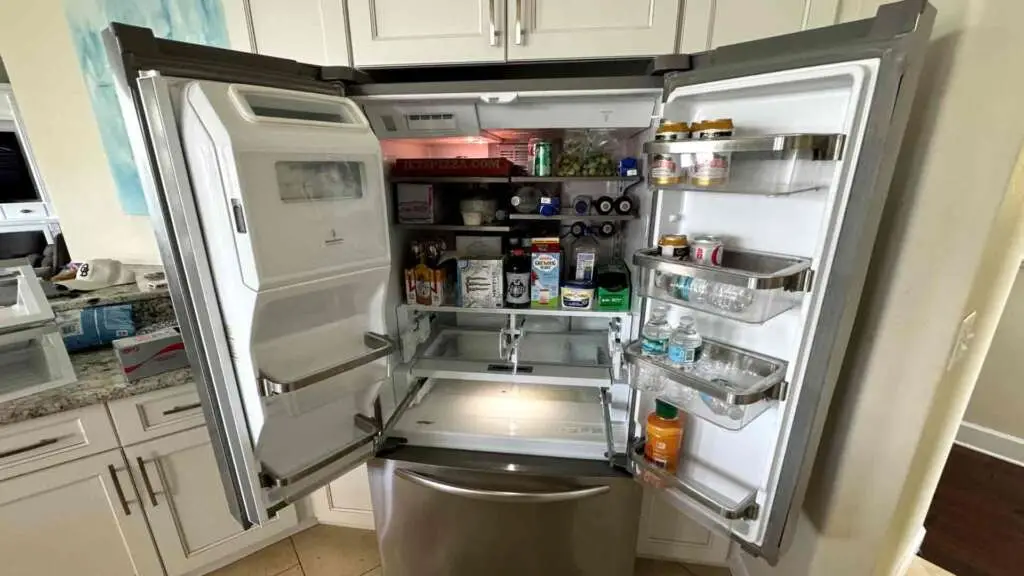
How:
- Move food to a cooler (or another freezer).
- Unplug the unit and leave doors open.
- Let ice melt naturally (towels help).
- Once dry, restart and monitor temperatures over the next 24 hours.
If cooling returns but heavy frost comes back fast, the underlying defrost components likely need repair.
Food Safety: What to Save, What to Toss
If your broken freezer has been warm for a while, safety matters more than saving groceries.
- If food still contains ice crystals or feels refrigerator-cold, it can often be refrozen (quality may drop, but it’s usually safe).
- If perishable foods have been above 40°F / 4°C for 2+ hours, treat them cautiously—especially meat, seafood, and dairy.
- When in doubt, prioritize health over cost.
Discover Solutions for Other Common Refrigerator Issues


When a Technician Is the Smarter Move
Some problems look simple but are risky or not cost-effective to DIY—especially sealed-system and electrical control issues. Consider professional help if:
- The compressor clicks but won’t start, or starts and shuts off repeatedly.
- The freezer never reaches 0°F / -18°C after coil cleaning and proper airflow.
- You suspect refrigerant issues (cooling is weak, compressor runs a lot, but temps don’t drop).
- You see recurring heavy frost even after a manual defrost (likely defrost heater/thermostat/control fault).
At that point, you likely have a broken freezer that needs parts testing with proper tools.
Prevention
You can reduce the odds of another broken freezer moment with a few habits:
- Clean condenser coils a couple times per year (more if you have pets).
- Keep vents clear—avoid packing items tightly against interior panels.
- Don’t overload warm food; let leftovers cool before freezing.
- Check the gasket periodically and wipe it clean.
Quick Wrap-Up
A broken freezer is stressful, but it’s often traceable to airflow problems, dirty coils, door sealing issues, or a defrost failure. Start with the easy checks, use the table to match symptoms to causes, and do a manual defrost if frost buildup is obvious. If temperatures still won’t stabilize, it’s time to involve a technician—especially for compressor or sealed-system problems.
If you want, describe your model type (upright, chest, fridge-freezer combo) and the exact symptom (noise, frost pattern, temps), and I’ll narrow it down to the most likely cause and the best next step.